Archival heritage represents the historical memory of a place. Their complex structures and the multiplicity of materials they are made up of, present special conservation requirements linked to the type of supports and materials as the processes of degradation undergone over time. Each volume or document produced represents a unique object and it is the task of the restorer to preserve its individual elements.
Archival material is certainly among the most complex and difficult to preserve. We are not always in the presence of bindings whose structures and seams follow precise scheme. Sometimes we can see reworkings or the use of fragments intended to reinforce weak points. Such stratifications tell us about the history of that artefact, so it is important to assess the most philologically correct approach with which to intervene.
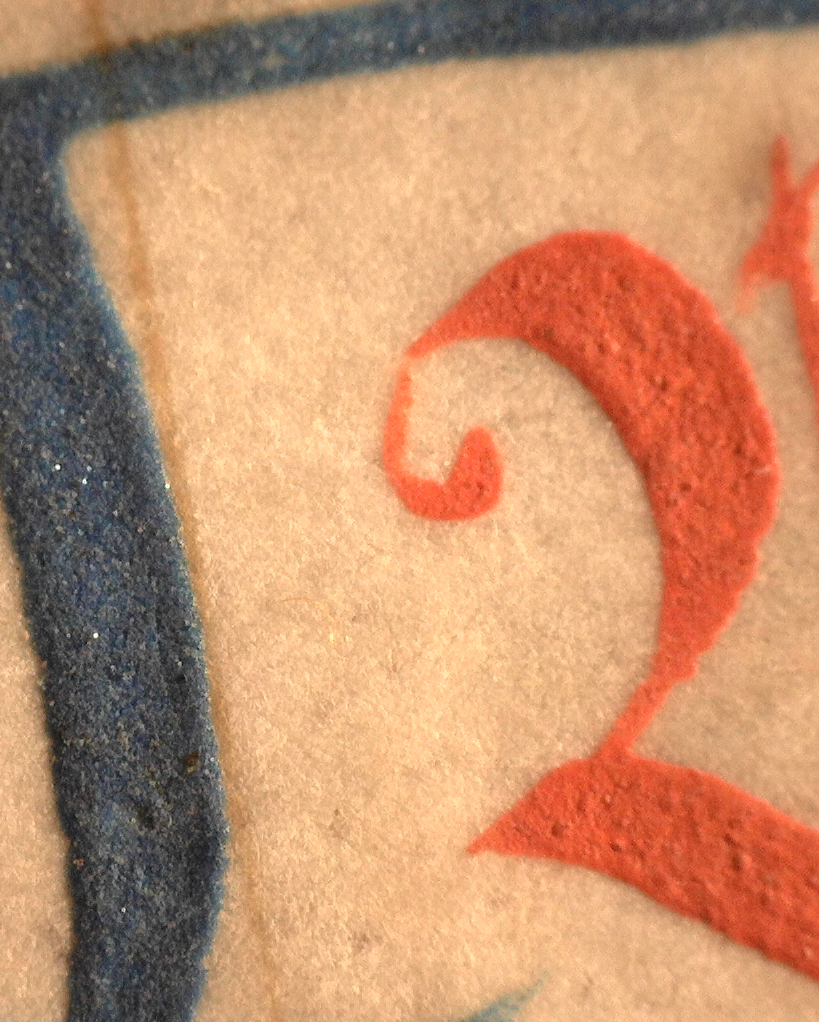
Analysing objects to understand their history and manufacture, for the best conservation approaches.
The use of materials of an acidic nature such as, for example, the iron-based inks used for manuscripts, make this type of material extremely fragile due to the sometimes severe fragmentation to which it is subjected. For this reason, it is important to pay extreme attention to the types of intervention and the way it is carried out, in order to preserve and conserve the information contained in the document, slowing down its degradation processes and preventing further loss.