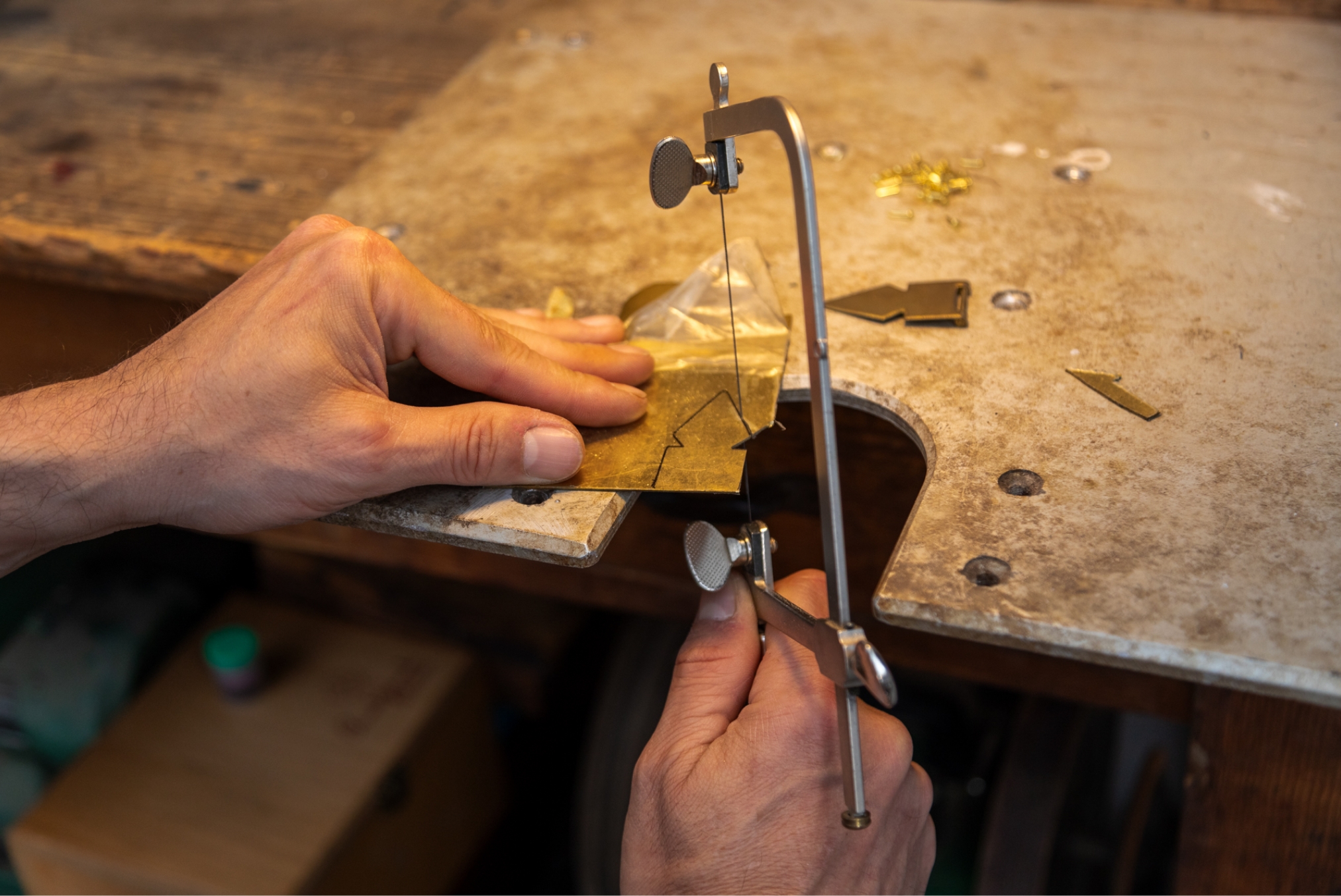
The components that characterise antique book and manuscript bindings include wooden boards, which were used to make covers for mainly parchment volumes, and metal elements such as studs, staples and corner-pieces. The latter, made in historical ornamental styles, offer a source for the study of bindings and make it possible to identify their manufacture in specific geographical areas.
This type of cover with its extremely elaborate manufacture uses very complex binding systems, creating a true mechanical structure in which the balance of forces, given by the nature of the individual materials used, is of fundamental importance for the functionality of the book. The in-depth study of the manufacture and styles of bindings allows us to recognise, restore and sometimes reproduce some lost elements.

Study the history of the artefact and its elements to design and apply the best conservation intervention methods.
The nature and interaction of different materials such as wood, metal, leather and parchment, together with unsuitable conservation systems, over time often cause deterioration of the object, making its enjoyment impossible. By analysing each structural element and the associated conservation issues, we design each restoration project preserving the present historical, structural and ornamental instances, proposing conservation solutions aimed at restoring the object’s functionality.


